


They Walked Until They Couldn’t: Retracing the Sandakan Death March
Helolokal
03:03:35 March 24, 2026
You don’t expect silence to feel this loud.
It starts at the edge of the jungle — just a narrow path, barely visible beneath layers of roots and damp leaves. If you didn’t know what this place was, you might think it was just another trail in Sabah.
But it isn’t.
People think this is just history,” our guide tells us quietly. “But for us, it never really ended.”
His name is Daniel — a soft-spoken local who grew up hearing stories about the war from his grandfather. Stories that were never written down. Stories that, until recently, no one really asked about.
We take our first step into the trail.
“They were not meant to survive”
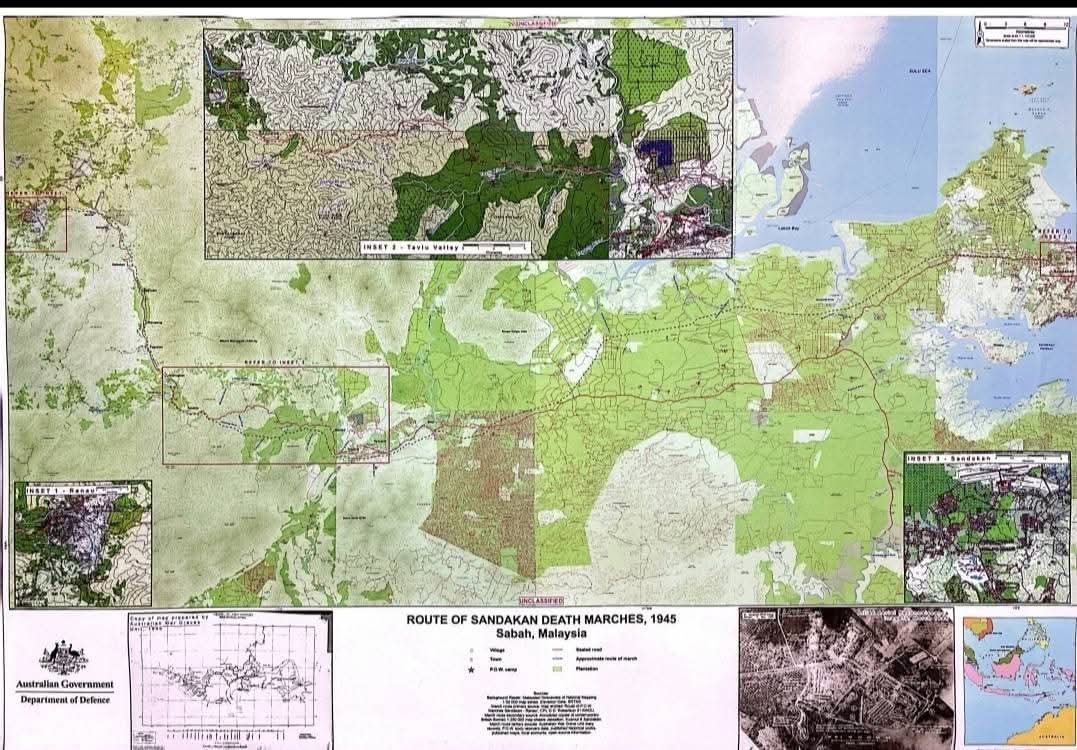
The Sandakan Death March is not widely talked about outside certain circles. Unlike the battlefields of Europe, this part of World War II feels… hidden.
Daniel stops us near a shallow stream.
“They made them walk through terrain like this,” he says. “No proper food. No medicine. And if they couldn’t continue…”
He pauses.
“They were left behind.”
We don’t ask what that means. We already know.
Walking changes everything
Reading about history is one thing.
Walking it is something else entirely.
The humidity clings to your skin. Your boots sink into soft earth. The jungle feels endless. After just an hour, your legs begin to ache — and you realise something uncomfortable:
You’re struggling… and you’re well-fed, well-rested, and free to stop anytime.
“They didn’t have that choice,” Daniel says.
Voices that were never recorded
Later that evening, sitting by a simple campsite, Daniel shares something more personal.
“My grandfather never called it the ‘Death March’,” he says. “He just called it ‘that time’.”
“He said the jungle was quieter back then. Not because it was peaceful — but because people were too weak to make noise.”
We sit in silence.
No one checks their phone. No one speaks.
A community that remembers
On the third day, we meet a small rural community not far from the route.
An elderly woman, Maria, welcomes us with tea. Her hands are weathered, but her voice is steady.
“I was very young,” she says. “But I remember seeing them pass.”
She doesn’t elaborate much. She doesn’t need to.
“Some of the older people helped quietly,” she adds. “Gave water when they could.”
“Wasn’t it dangerous?” we ask.
She nods.
“But sometimes, you just do what is right.”
Why this journey exists
What makes this experience different isn’t just the route.
It’s the people who carry the memory.
Daniel isn’t a tour guide in the traditional sense. He’s a bridge — between a past that risks being forgotten, and travellers willing to understand it.
“If we don’t tell these stories,” he says, “they disappear.”
The moment it hits you
On the final day, there’s no dramatic ending.
No grand viewpoint. No applause.
Just a quiet clearing.
Daniel gathers the group.
“Most people who walked this route didn’t make it,” he says.
“And now… you’ve walked part of it.”
That’s when it hits.
Not suddenly. Not loudly.
But deeply.
This is not for everyone
This experience isn’t designed to be comfortable.
It’s not meant to be “enjoyed” in the traditional sense.
But if you’re someone who:
- Wants to understand history beyond textbooks
- Seeks meaning in travel
- Is willing to feel something real
Then this might be one of the most important journeys you take.
Before you leave
As we head back toward Sandakan, Daniel says one last thing:
“Thank you for walking.”
Not “thank you for coming.”
Not “thank you for booking.”
But walking.
Because here, that’s what matters.
👉 Request this journey on Helolokal: https://helolokal.com/shop/4d3n/walk-the-path-of-heroes-the-hidden-sandakan-death-march-route/
Because some stories can only be understood this way.